UMass Boston’s Xiaohui Liang Named 2026 Fellow for the Institute of Electrical and Electronics Engineers (IEEE)
UMass Boston’s Associate Professor and Associate Chair of Computer Science, Xiaohui Liang, has been named an IEEE Fellow for his contributions in Internet of Things (IoT) communication and data security.
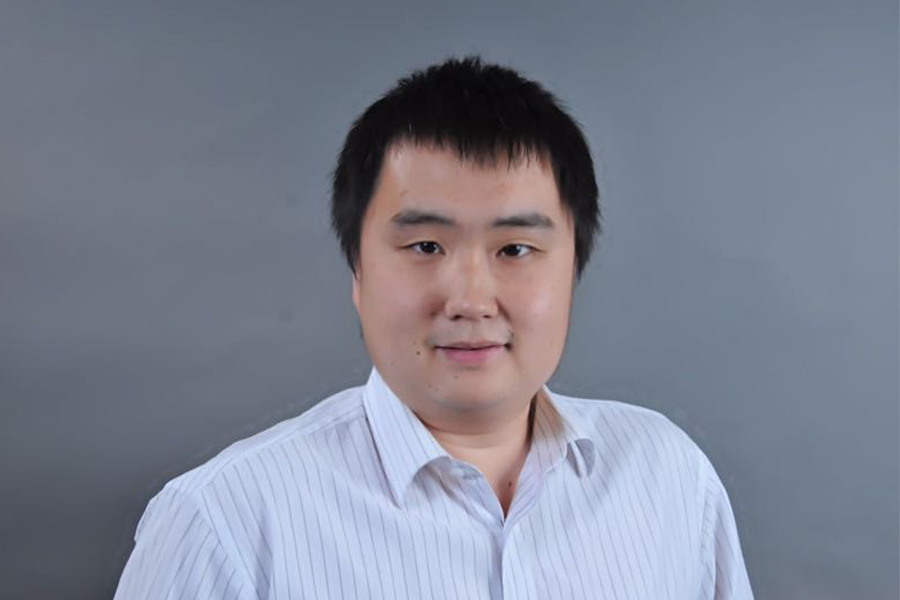
“I was thrilled to learn that I had been named an IEEE Fellow,” Liang said. “This prestigious recognition from IEEE is truly an honor, and I felt immense gratitude for my mentors, collaborators, and students who have inspired me and worked alongside me over many years. I also want to express my sincere thanks to my nominator and reference writers for their support of my application. Beyond the personal achievement, I feel a sense of obligation to focus on impactful research challenges and contribute meaningfully to the IEEE community.”
IEEE was founded in 1963 and is considered the world’s leading professional organization dedicated to advancing technology for the benefit of humanity. They have more than 500,000 members in over 190 countries, according to their website. The status of Fellow is given to IEEE members with extraordinary records of accomplishment. No more than 0.1% of the membership receives this distinction, making this distinction an incredibly prestigious honor in the field of computer science.
Liang’s research centers around keeping connected devices safe as they share information with each other. These devices are known as the IoT and include everyday technologies like smart home systems to tools for medical monitoring and healthcare.
An Interview with Xiaohui Liang:
His interest in this work stems from a personal connection that helped him understand the real-world stakes of the field.
“The pervasive adoption of IoT devices in everyday life sparked my interest in this research area,” Liang said. “As I taught cybersecurity in IoT classes, I emphasized the critical importance of securing home IoT systems. I’ve always been curious about the security and privacy of these devices, especially since I use them daily in my own home. This personal connection made me realize how tangible the risks are: vulnerabilities in smart speakers, cameras, or thermostats are not just theoretical, they directly impact privacy and safety.”
More recently, Liang’s work has expanded to healthcare, where IoT technologies hold promise, yet pose significant data security risks.
“My current research focus is a long-standing collaboration with medical professionals to deploy IoT solutions in both home and clinical settings,” Liang said. “We aim to integrate these systems into clinical workflows, such as EHR (Electronic Health Record) platforms and clinician dashboards, to enhance efficiency while addressing critical communication and data security challenges. Another key area is developing methods to prevent unnecessary information disclosure to online AI models, ensuring stronger privacy protection for individuals in IoT-driven environments.”
Liang sees his IEEE Fellow recognition as a reflection of the importance of this work.
“IoT communication and data security are foundational to the reliable and safe adoption of IoT technologies in our increasingly connected world,” said Liang. “As these devices become ubiquitous in homes, clinics, vehicles, and public spaces, their vulnerabilities pose significant risks to privacy, safety, and trust. Ensuring robust security protections is not just a technical necessity, but a cornerstone that enables these innovations to deliver their full potential, transforming lives and industries while safeguarding user confidence.”
When asked about what aspects he’s most proud of in IoT communication and data security, Liang pointed to the collective nature of his research.
“I am proudest of the collaborative, interdisciplinary work we’ve done to address real-world IoT challenges, particularly in healthcare. One impactful example is our solution using smart speakers to passively collect older adults’ spontaneous speech at home, enabling early detection of cognitive decline. This involved deploying IoT devices in both home and clinical settings to monitor cognitive and physical functions seamlessly. Our research not only advances IoT-enabled health monitoring, but also proactively addresses the critical issues of IoT communication and data security. By ensuring these solutions are robust and safe for real-world use, we have bridged the gap between innovation and practical deployment, ultimately improving quality of life for vulnerable populations.”
More information about Liang’s research is available at https://www.faculty.umb.edu/xiaohui.liang/index.html.